How to Tell a Story in English for Kids
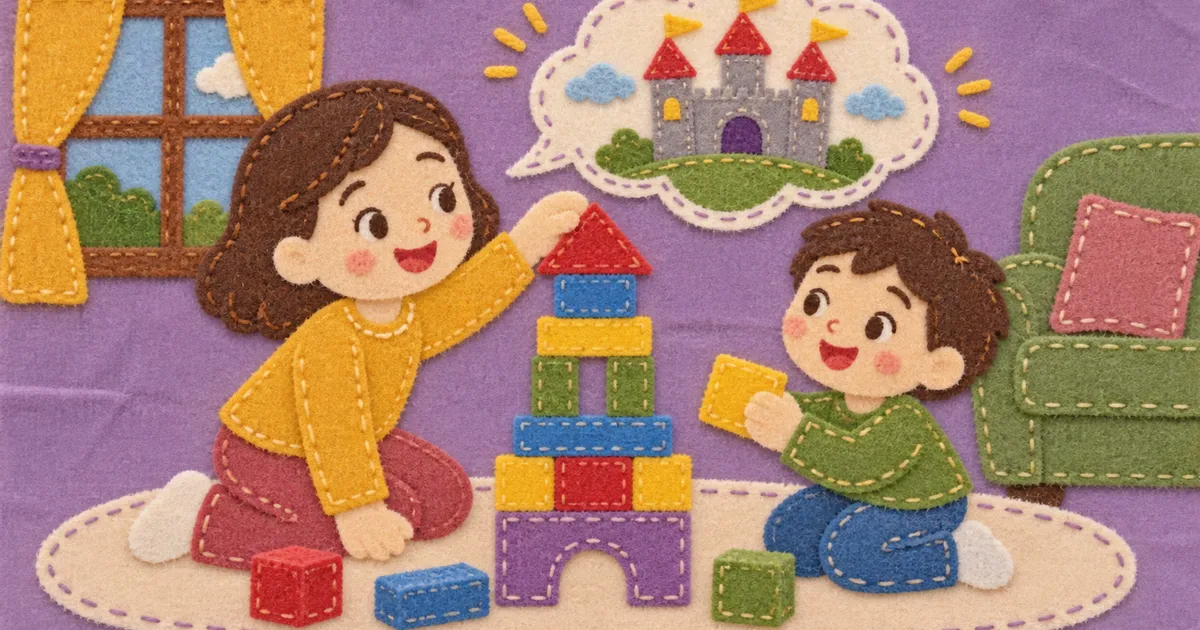
A clear children’s story needs three parts: a goal, a problem, and a resolution. Children can link them with five familiar phrases. Model a short picture story, then ask your child to retell it without interruption. Aim for clear, confident communication, not a polished performance.
Core Words That Hold a Story Together
For How to Tell a Story in English: Words and Activities for Kids, group language by purpose: opening, ordering events, introducing a problem, describing feelings, and closing. This framework supports new stories without full-script memorisation.
Choose one phrase from each row and keep the table visible. When your child pauses, point to the next phrase and wait for independent speech.
A Model Story in Context
Model five linked sentences: “One day, a child found a small box. First, the child shook it. Then a sound came from inside. The child felt surprised because the box began to move. In the end, a tiny toy robot climbed out.” The story has a setting, ordered actions, a feeling, a reason, and an ending.
For How to Tell a Story in English: Words and Activities for Kids, ask your child to change one element: the object, place, sound, feeling, or final event. “A box” might become “a bag”; “surprised” might become “worried.” Limited choices reduce language load while requiring original decisions.
For children, rehearse the model with five picture cards, one card per sentence. Read it once, mix the cards, and ask the child to restore the order using “first,” “then,” “because,” and “in the end.” On a second telling, cover the written sentences so the pictures support recall without turning the task into memorisation. Allow 30 seconds of planning before the child speaks.
Listen for one common mistake: listing actions with “and then” in every sentence. Prompt a repair by pointing to the relevant card and asking, “Why did that happen?” or “How did the child feel?” Children can add one line of dialogue and one descriptive detail, but keep the five-event frame. Finish by retelling the story together, then independently, and praise a specific success such as a clear reason or conclusion.
Activities for Different Ages
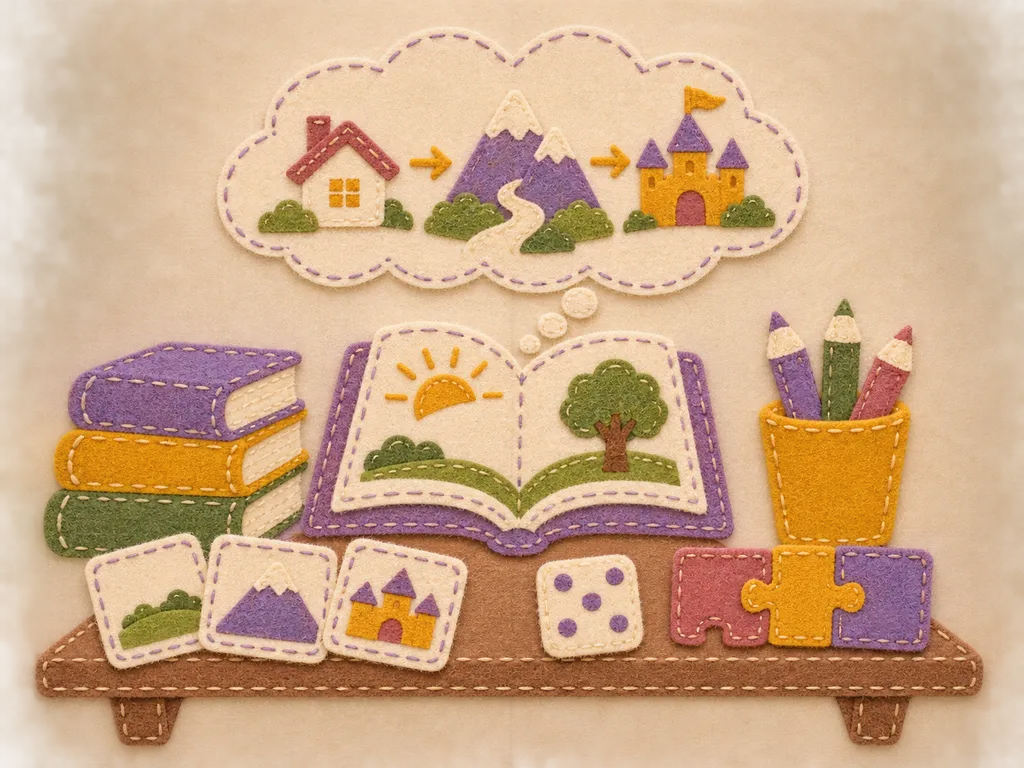
For school-age kids, use three large pictures: beginning, problem, and resolution. Your child orders them and says one sentence for each. Accept short lines such as “The cat is lost” or “It finds home.” Correct the sentence through repetition if needed, then continue.
For school-age kids, try a story bag. Put ordinary objects or picture cards inside: a spoon, leaf, bus, or hat. Your child chooses three and connects them in one story. During LearnLink lessonsAcross LearnLink lessons, our tutors help children build confident, everyday English step by step. and “How did the character feel?”
For school-age kids, add a viewpoint or time limit. Tell the same event as the protagonist, a witness, or someone who heard about it later. Older learners can plan with five notes, speak for one minute, then retell the story with clearer links and stronger detail.
A Short Practice Routine
Use How to Tell a Story in English: Words and Activities for Kids as a ten-minute routine. Spend two minutes choosing pictures, two minutes planning, three minutes telling the story, and three minutes changing one detail. Stop while the task feels manageable; retell it another day.
During the first telling, listen for meaning. During the second, correct one target, such as past-tense verbs or sequence words. During the third, request expression: a pause before the problem, a different voice for speech, or one feeling word. A single focus keeps correction clear.
Three-picture Story Challenge
Choose any three pictures. Say one opening sentence, connect the pictures with “first,” “then,” and “finally,” and include one problem and one feeling. Retell the story once more with a different ending.
For children ages 6–8, begin with three picture cards and offer a five-vocabulary: “once,” “first,” “then,” “but,” and “finally.” Give 30 seconds for planning before speaking. If remembering the sequence is difficult, let the child point to each card while telling. Children can add two lines of dialogue and a reason for their choice.
A common mistake is correcting every verb as soon as it is spoken, which can break the story’s flow. Instead, make one small tally mark each time the chosen target is missed, but wait until the story is over to model one corrected sentence. Ask the child to repeat that sentence, then retell only the relevant part in 20–30 seconds. End by naming one success precisely, such as “You used ‘finally’ before the final scene,” rather than giving general praise.
Common Storytelling Mistakes
Correcting every error can make a child lose the plot. Note one repeated mistake and discuss it afterward. Allow slips that do not block meaning. A calm recast—“Yes, the fox went home”—provides the correct form without turning storytelling into a grammar test.
Overcomplicated stories create memory tests instead of speaking practice. A long cast, multiple places, and repeated problems overload the sequence. Begin with one protagonist, one place, one problem, and one ending. Add dialogue or detail when the basic sequence is secure.
A child may memorise a model word for word. Test flexible use by changing a picture or requesting another ending. Keeping the structure while replacing details shows that language has become a tool, not a fixed script.
- Choose one familiar picture book and retell its beginning, middle, and ending.
- Ask three simple questions: who acted, what happened, and where it happened.
- Model past-tense verbs, then invite your child to repeat the corrected sentence.
- Use five sequence words to connect events without adding unnecessary details.
- Praise one clear detail, then gently revise one confusing part together.
When a word has several meanings or pronunciations, Cambridge Dictionary is a useful check before turning it into child-friendly examples.
Frequently Asked Questions
How Many Storytelling Words Should a Child Learn at Once?
Begin How to Tell a Story in English: Words and Activities for Kids with four to six words or phrases. Choose different functions: “one day,” “then,” “but,” “because,” and “in the end.” Practise them across multiple stories before adding more. A small, familiar set works better than a long list seen once.
What Should I Do If My Child Switches Languages?
Language switching does not mean failure. Your child may have an idea but lack the English word. Let the story continue, supply the word briefly, then invite your child to repeat the whole sentence in English. For multilingual children, comparing a phrase across languages can clarify meaning without replacing English practice.
Should My Child Write the Story Before Speaking?
Young learners can plan with pictures instead of full sentences. Older children may use five short notes: character, place, problem, action, and outcome. A complete script encourages reading instead of storytelling. If speaking feels hard, provide a few opening words on a card, then ask your child to look up and finish freely.
How Often Should Children Practise Storytelling?
Start with two or three short sessions each week. Each session can last about ten minutes and follow a familiar routine. Keep the same story words while changing the pictures or conclusion. Regular practice helps your child retrieve language, notice gaps, and retell with less adult support.
Try this today: choose three pictures, select five sequence words, and help your child tell five connected sentences. Repeat the activity two or three times this week, changing one detail after each retelling.
If your child needs steady speaking practice, start small — choose a trial lesson.
Stay updated on our latest tips and resources by following us on Instagram LearnLink.